
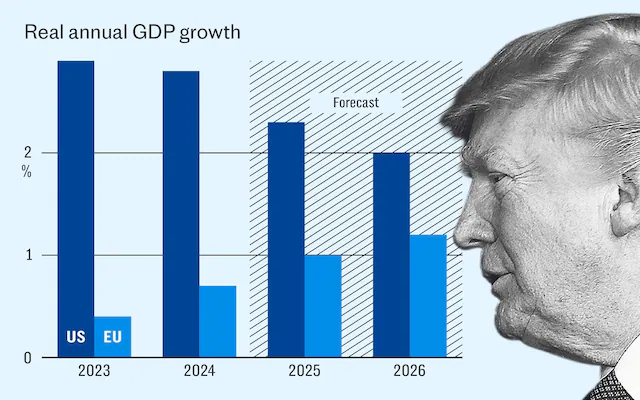
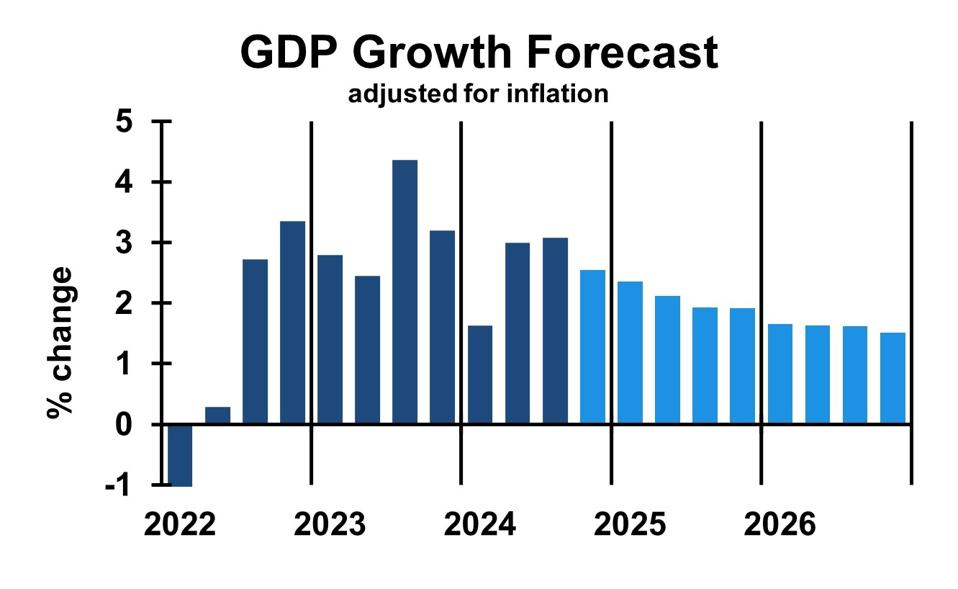
The U.S. job market in 2026 is no longer expanding at the explosive pace seen during the post-pandemic recovery. Instead, it is entering a phase of measured, structural transformation. Hiring continues, but the nature of employment demand is rapidly evolving. Below are the most important employment shifts defining this year.
Steady but Slower Hiring Growth
While unemployment remains relatively low, the pace of new job creation has moderated. Companies are hiring cautiously, focusing more on long-term sustainability rather than aggressive expansion.
Several factors are contributing to this trend:
- Higher borrowing costs have made businesses more conservative in expansion plans.
- Employers are prioritizing productivity over headcount growth.
- Economic uncertainty is encouraging strategic workforce planning.
This does not indicate weakness. Instead, it reflects a maturing labor market transitioning from rapid recovery to stable growth.
Increased Demand for Digital and AI-Related Skills
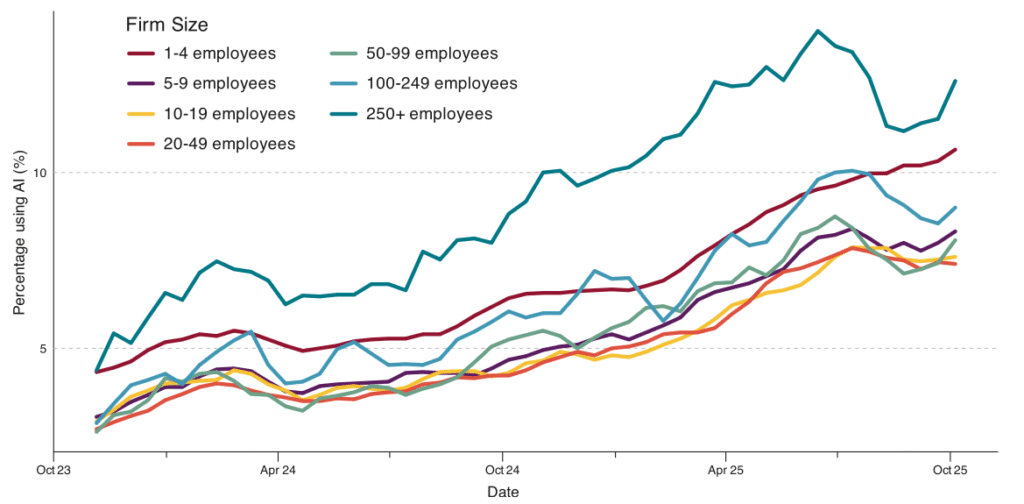
One of the most defining characteristics of the U.S. Economy 2026 is the acceleration of artificial intelligence integration across industries. Companies are not just experimenting with AI — they are embedding it into core operations.
As a result, there is a sharp rise in demand for:
- Data analysts and AI specialists
- Cybersecurity professionals
- Cloud computing engineers
- Automation system managers
Even non-technical roles now require digital literacy and AI familiarity. The labor market is shifting from traditional experience-based hiring to skill-based recruitment models.
Workers who invest in digital upskilling are positioning themselves for long-term career resilience.
Declining Demand in Routine Administrative Roles
Automation and AI-driven systems are significantly reducing the need for repetitive, task-based roles. Many routine administrative and clerical jobs are being replaced by software solutions that improve efficiency and reduce operational costs.
This includes automation in:
- Data entry and documentation
- Customer service chat systems
- Payroll and accounting processes
- Scheduling and internal coordination
However, this does not mean opportunities are disappearing entirely. Instead, job roles are evolving. Employees in traditional roles are being encouraged to develop analytical, strategic, and interpersonal skills that machines cannot replicate.
The workforce transformation in 2026 is about evolution, not elimination.
Expansion in Healthcare, Renewable Energy, and Skilled Trades
While some sectors are slowing, others are experiencing strong expansion. Structural and demographic shifts are fueling demand in specific industries.
Healthcare continues to grow due to:
- An aging population
- Increased demand for specialized care
- Expansion of mental health services
Renewable energy is accelerating because of:
- Federal sustainability initiatives
- Private sector green investment
- Rising demand for clean technology solutions
Meanwhile, skilled trades such as construction, electrical services, and infrastructure development are benefiting from large-scale government investment programs.
These sectors represent long-term, stability-driven employment growth, making them crucial pillars of the U.S. job market in 2026.
Improved Cost Efficiency Through AI Integration
Companies integrating AI into core operations are reporting measurable financial impact. For example, Amazon uses AI-driven demand forecasting systems to optimize inventory placement across its global warehouses. This reduces storage costs, minimizes unsold stock, and improves delivery speed — directly strengthening profit margins.
Similarly, Walmart leverages machine learning algorithms to monitor supply chain disruptions in real time. By predicting shortages or delivery delays before they escalate, the company reduces operational waste and transportation inefficiencies.
In the financial sector, JPMorgan Chase utilizes AI-powered fraud detection systems that analyze millions of transactions instantly. This reduces fraud losses and lowers compliance costs.
These examples show that AI is not just innovation — it is a cost-optimization engine improving operational efficiency at scale.
Higher Automation Capability Across Business Functions
Automation in 2026 goes beyond basic chatbots. Companies are embedding AI deeply into workflow systems.
For instance, Tesla integrates AI-driven robotics in its manufacturing plants, significantly improving production speed while maintaining precision. This reduces human error and accelerates vehicle assembly timelines.
In customer service, Bank of America’s AI assistant “Erica” handles millions of customer queries, from account balances to transaction tracking. This reduces pressure on human agents while maintaining service efficiency.
Even consulting firms like Accenture use AI platforms to automate data processing and performance analysis for clients, allowing consultants to focus on high-level strategic advisory.
The result is a leaner, more productivity-focused corporate structure, where automation enhances human capability rather than simply replacing it.
Faster and More Accurate Data-Driven Decision-Making
Speed is a competitive advantage in the U.S. Economy 2026, and AI enables real-time strategic responses.
Netflix uses advanced machine learning algorithms to analyze viewer behavior and predict content preferences. This data-driven approach guides billion-dollar content investments and improves subscriber retention.
Similarly, Google applies AI analytics to optimize advertising placements, allowing businesses to target audiences with remarkable precision. This increases marketing ROI and improves campaign efficiency.
Retail giant Target uses predictive analytics systems to adjust pricing, manage seasonal inventory, and forecast demand patterns.
These examples illustrate how AI strengthens strategic intelligence, revenue optimization, and market responsiveness.
Scalable Digital Service Models Enabled by AI
Scalability is one of AI’s most powerful economic advantages. Companies can expand digital services without proportionally increasing operational costs.
For example, Microsoft integrates AI tools into its Azure cloud services, allowing enterprise clients to deploy machine learning applications globally. Because the infrastructure is cloud-based, expansion does not require heavy physical investment.
Similarly, Salesforce embeds AI capabilities into its CRM systems, enabling businesses worldwide to automate sales forecasting and customer engagement.
Streaming platforms like Spotify use AI-powered recommendation engines to personalize user experiences for millions simultaneously — without increasing workforce size at the same rate.
This demonstrates how AI enables exponential growth models driven by digital scalability and automation efficiency.
Semiconductor Manufacturing as the Backbone of AI Growth
At the foundation of AI innovation lies semiconductor technology. Companies like NVIDIA and AMD produce advanced GPUs and processors that power machine learning systems, data centers, and enterprise AI platforms.
NVIDIA, in particular, has positioned itself as a central player in AI acceleration hardware. Its high-performance chips are used by tech giants including Microsoft, Meta, and Amazon.
Without these semiconductors, AI systems would lack the computational speed necessary for complex data processing. This makes chip manufacturers a strategic cornerstone of the AI investment ecosystem.
AI Cloud Infrastructure Driving Market Expansion
AI applications require enormous data storage and computing capacity. Cloud providers such as Amazon Web Services (AWS), Microsoft Azure, and Google Cloud are expanding global data center networks to meet rising demand.
These firms invest billions in cybersecurity, server infrastructure, and AI-compatible architecture. Their platforms support everything from fintech startups to multinational corporations.
Because nearly every modern AI deployment relies on cloud computing, this sector represents a long-term, infrastructure-backed investment opportunity within the stock market.
Machine Learning Platforms and Enterprise Automation Software
Enterprise AI platforms are transforming corporate management systems.
Companies like Palantir provide AI-driven data analytics platforms used by government agencies and large corporations to interpret complex datasets. Meanwhile, UiPath specializes in robotic process automation (RPA), helping businesses automate repetitive administrative workflows.
Software giants such as SAP and Oracle integrate AI into enterprise resource planning (ERP) systems, enabling predictive budgeting and real-time financial tracking.
These platforms act as digital command centers, making them critical tools in the structural transformation of the U.S. Economy 2026.
Final Insight: AI as a Structural Investment Theme
The common thread across all these examples is clear: AI adoption is generating measurable efficiency gains, revenue expansion, and operational scalability.
Investors are no longer investing in AI based on hype. Instead, they are backing companies demonstrating:
- Strong revenue growth
- Infrastructure leadership
- Technological dominance
- Long-term competitive advantage
In 2026, Artificial Intelligence is not a temporary market narrative — it is a structural economic shift redefining business models and capital markets.
#USEconomy2026 #USBusinessNews #EconomicOutlook #MarketTrends2026 #StockMarket2026 #InvestingStrategy #MarketAnalysis #AIRevolution #Carrerbook #Anslation#ArtificialIntelligence #AIInvesting #TechStocks #DigitalTransformation #InnovationEconomy #WealthBuilding