
In the ever-evolving business landscape, technology adoption is no longer a choice but a necessity. As organizations strive to remain competitive and efficient, embracing advanced tools and systems becomes essential. However, one significant factor holding many businesses back is technology adoption cost analysis, which often raises concerns about the upfront investment. Despite these challenges, the long-term benefits of implementing the right technological solutions far outweigh the costs. From boosting productivity to enabling secure and remote workflows, adopting technology transforms the way businesses operate, making it a top priority for sustained success.
Why Prioritize Technology Adoption?
Technology adoption refers to the process of integrating advanced tools and systems into your business operations. It’s not merely about upgrading your gadgets but embracing innovative solutions that can drive efficiency, productivity, and growth. In a business environment, technology adoption often involves transitioning from outdated, manual processes to streamlined, automated workflows.

Most of us have fully embraced technology in our personal lives. We use smartphones and apps to stay informed, connected, entertained, and healthy. However, businesses often hesitate to adopt technology due to concerns over cost, technical know-how, and employee/client acceptance. This hesitation can lead to countless hours wasted on inefficient processes that technology could easily improve.
By incorporating advanced systems, businesses can stay competitive and adapt to changing market demands. Technology adoption is not limited to IT infrastructure but spans various aspects such as customer service tools, cloud storage, and workflow automation systems. Each contributes to creating a robust operational ecosystem. Without it, businesses risk falling behind their competitors in terms of efficiency and service quality.
The Business Impact of Technology Adoption
In today’s fast-paced world, technology adoption isn’t a luxury—it’s a necessity. Businesses that leverage technology effectively gain a competitive edge by improving efficiency, reducing costs, and enhancing customer satisfaction. By incorporating technology into your operations, you can:
- Enhance productivity: Automated processes free up time for value-added activities. For instance, instead of spending hours manually managing invoices, businesses can use software to handle this task in seconds.
- Improve decision-making: Real-time data and analytics offer actionable insights, helping businesses make informed strategic decisions.
- Increase customer satisfaction: Seamless service delivery builds loyalty. Customers appreciate quick responses and error-free transactions, both of which technology enables.
- Streamline compliance: Digital systems help ensure that regulatory requirements are met with precision. Automated alerts and tracking features make compliance more manageable.
For example, if your business still relies on postal mail for client communication or in-person meetings for contract signings, you’re likely wasting valuable time. Technology such as digital communication platforms and e-signature tools can streamline these processes, allowing you to work smarter rather than harder. This transition not only saves time but also reduces costs associated with paper, printing, and travel.
Exploring the Technology Adoption Lifecycle
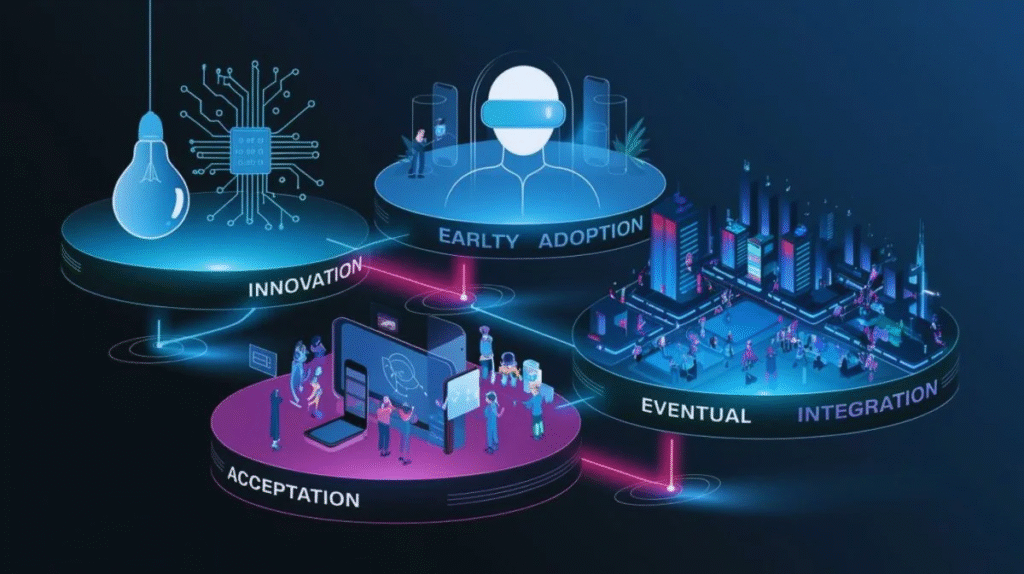
Businesses typically experience five stages in the technology adoption lifecycle:
- Innovation: Early adopters experiment with cutting-edge technologies to address inefficiencies or explore new markets.
- Early Majority: Technology becomes mainstream, offering proven benefits that attract a larger audience.
- Late Majority: Businesses that are cautious begin adopting out of necessity as the industry standard evolves.
- Laggards: The final adopters join due to pressure from market demands or operational shortcomings.
Understanding where your business lies in this cycle can help you plan your technology adoption journey more effectively. Early adoption often results in competitive advantages, while late adoption may result in playing catch-up.
Redefining the Five Stages of Technology Adoption

1. Awareness
Understanding the need for technological upgrades is the first step. Identifying inefficiencies or gaps in your current processes is critical. Conducting internal audits and customer feedback sessions can reveal areas that require modernization. For example, if your team struggles with finding documents, a digital document management system could be the solution.
2. Interest
Once you recognize the need, research begins. Businesses evaluate various tools to determine the best fit. This stage involves detailed comparisons of features, costs, and scalability. Engaging team members in this process ensures buy-in and smoother implementation.
3. Evaluation
Cost analysis, team feedback, and vendor comparisons play a key role in decision-making. Businesses consider ROI, compatibility with existing systems, and the long-term benefits of adoption. For instance, a business might calculate the time saved through automation and compare it to the upfront costs.
4. Implementation
Deploying the chosen technology requires planning, training, and gradual integration. Effective implementation also involves setting up support systems to address potential issues. Clear timelines and milestones can ensure that the transition is smooth and aligned with business goals.
5. Confirmation
Post-implementation reviews ensure the technology delivers its promised benefits. Gathering performance data and soliciting team feedback help refine its usage and maximize its impact. Success stories and metrics can motivate teams to embrace the technology fully.
FAQs
#TechnologyAdoption #DigitalTransformation #Carrerbook #Anslation #BusinessSuccess #Innovation #BusinessGrowth #AIinBusiness #TechStrategy #Entrepreneurship #FutureOfWork #DigitalEconomy