
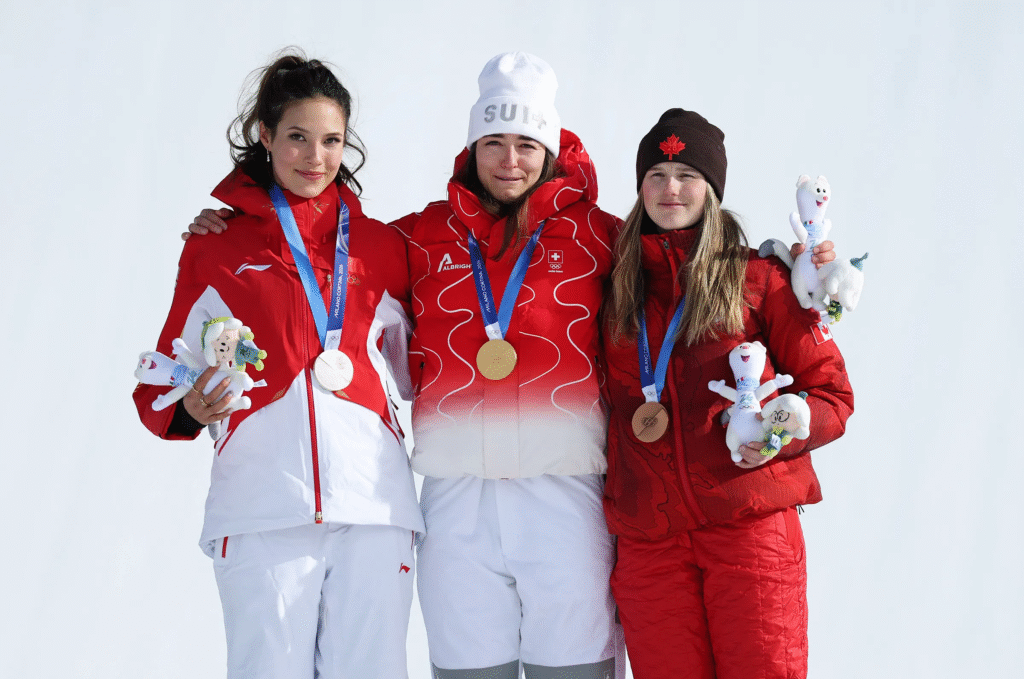
Eileen Gu delivered one of the most emotional performances of the 2026 Milan Cortina Winter Olympics , capturing a silver medal in women’s freeski slopestyle and reaffirming her place among the defining athletes of her generation. The result marked a repeat of her podium finish from the 2022 Beijing Games, but this time it carried deeper meaning, shaped by injury, doubt, and relentless perseverance.
The 22-year-old American-born freestyle skier, who represents China, described her slopestyle run as the best of her career. Competing on one of the most progressive courses women’s freeskiing has ever seen, Gu pushed technical boundaries while embracing the pressure of the Olympic stage.
A Risk, a Redemption, and a Career-Best Run
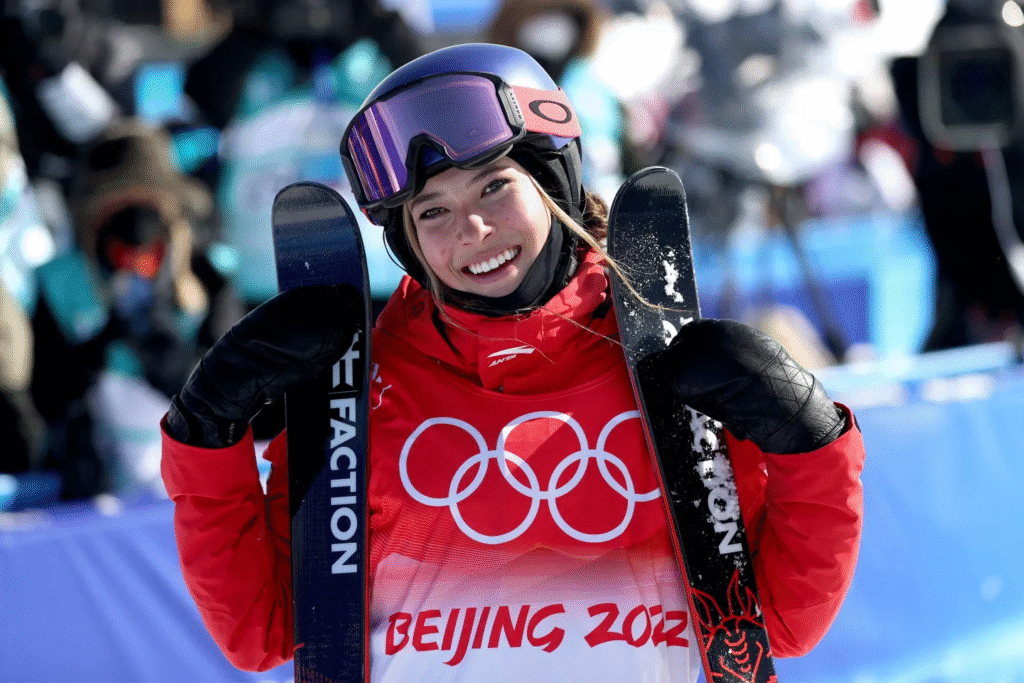
Gu entered the slopestyle final determined to land an old-school aerial trick known as “disaster,” a move rarely attempted in women’s competition. After failing to execute it in her first two runs, she faced a critical decision in her final attempt. Choosing courage over caution, Gu committed fully and landed the trick cleanly, securing a score of 86.58.
That effort placed her just behind Switzerland’s Mathilde Gremaud, who claimed gold with 86.96, in a result that mirrored the Beijing 2022 standings. Despite missing out on gold, Gu embraced the moment, calling it her “best slopestyle run ever” and celebrating the progress she has made as an athlete.
Overcoming a Year of Setbacks
Gu’s journey to Milan Cortina was far from smooth. In 2025, she endured a string of physical and mental challenges that threatened to derail her Olympic preparation. A shoulder injury forced her to miss the Asian Winter Games, while a crash during a streetstyle competition later in the year led to her withdrawal from the X Games.
The most serious setback came in August during training at Cardrona Alpine Resort, when a severe accident nearly ended her career. Gu later described it as a “very terrible accident,” admitting that the recovery tested her resilience and confidence. Throughout the process, she asked fans and media to respect her training space, emphasizing the importance of focus and safety
A Message of Pride and Progress
Reflecting on her silver medal, Gu shared a deeply personal message that captured the emotional weight of the achievement.
“Olympic silver and my best slopestyle run ever. Proud to put my best out there when it counted today, during the most progressive women’s slopestyle contest ever. This last year has felt like making up for the previous three — I have never worked so hard for anything in my life. Beyond overcoming doubt and fear and injury, I feel I am finally progressing in my skiing again.”
Her words highlighted not disappointment, but growth — a mindset that has defined her career from the start.
A Proven Champion on the Olympic Stage
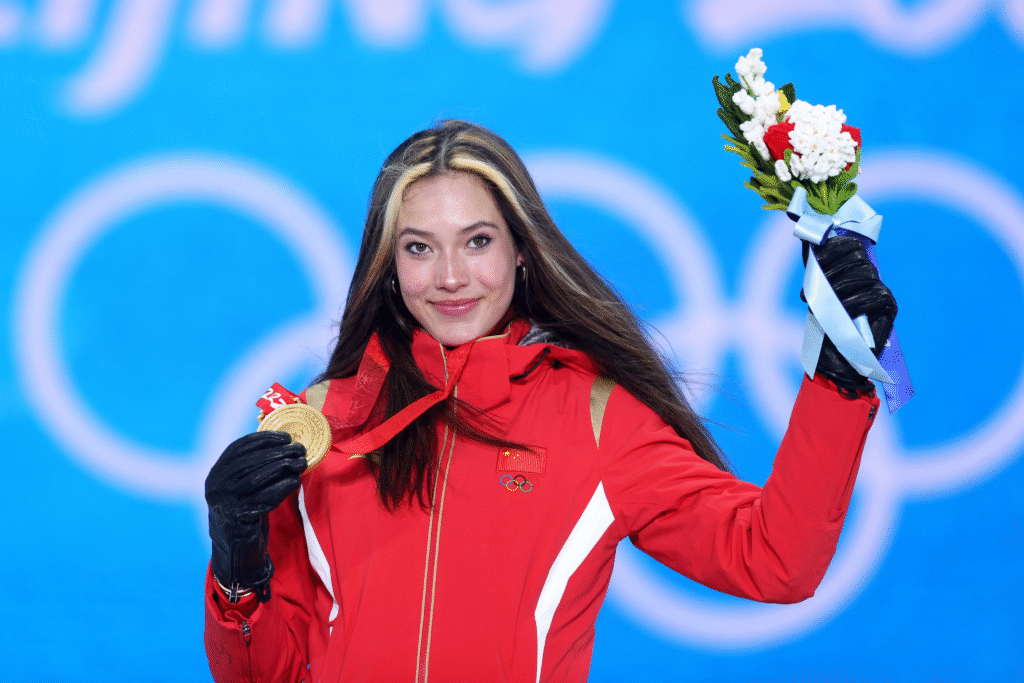
Gu rose to global prominence at the Beijing 2022 Olympics, where she became the youngest Olympic champion in freestyle skiing history. She captured gold medals in big air and halfpipe, while finishing runner-up in slopestyle.
That breakout year earned her the Best Breakthrough Athlete and Best Female Action Sports Athlete awards at the ESPYs, cementing her status as both an elite competitor and a cultural figure in winter sports.
Representing More Than Medals
Born in San Francisco to a Chinese immigrant mother, Gu made headlines by choosing to represent China at the Olympics. She has consistently stated that her decision was rooted in representation rather than financial gain.
“The U.S. already has the representation,” Gu said in an interview with Time Magazine. “I like building my own pond.”
Gu has explained that she has spent a significant portion of her life in China and views her role as a bridge between cultures. While questions around citizenship have followed her, she has declined to engage in speculation, choosing instead to focus on sport and impact.
Standing with Fellow Athletes Amid Political Tension
Beyond competition, Gu became part of a wider conversation at the Games after expressing sympathy for American freeskier Hunter Hess, who faced backlash following comments about U.S. immigration policy. Former U.S. President Donald Trump publicly attacked Hess on social media, labeling him a “loser.”
Gu revealed that she had been in contact with Hess and understood the pressure he was facing.
“As someone who’s been caught in the crossfire before, I feel sorry for the athletes,” Gu said. “It’s an unwinnable press war.”
She lamented that political controversy had the potential to overshadow the Olympics, calling it contrary to the spirit of the Games.
A Call for Unity and Olympic Values
Gu emphasized that sport should serve as a unifying force rather than a divisive one.
“The whole point of sport is to bring people together,” she said. “It’s one of the few common languages — the human body, the human spirit, the competitive spirit, the ability to break limits.”
Fellow Olympians, including Chloe Kim, echoed similar sentiments, highlighting diversity, compassion, and the right of athletes to express themselves without fear.
Looking Ahead at Milan Cortina
With slopestyle silver secured, Gu remains a strong favorite in her signature events — big air and halfpipe — where she previously dominated at Beijing 2022. Regardless of future results, her impact at Milan Cortina has already extended beyond medals, touching on resilience, representation, and the enduring values of the Olympic movement.
Disclaimer: This article is intended for informational and editorial purposes only. All quotes, results, and event details are based on publicly available reports. Official Olympic records and athlete statements remain subject to confirmation by relevant authorities.
#EileenGu #WinterOlympics2026 #MilanCortina #OlympicSilver #FreeskiSlopestyle #WomenInSports #OlympicSpirit #Resilience #AthleteVoice#Carrerbook#Anslation.