
The U.S. Supreme Court delivered a historic blow to former President Donald Trump’s economic agenda, striking down his sweeping emergency tariffs in a 6–3 decision that reshapes the balance of power between the White House and the judiciary.
The ruling marks the first major merits loss for Trump since returning to office and could have sweeping consequences for U.S. trade policy, the economy, and the upcoming midterm elections.
What the Supreme Court Decided
In a strongly worded 21-page opinion, Chief Justice John Roberts warned that the administration had attempted a “transformative expansion” of presidential authority over tariff policy.
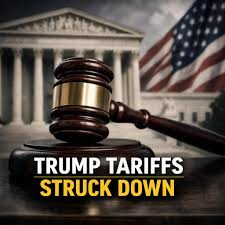
The Court ruled that Trump improperly relied on the International Emergency Economic Powers Act (IEEPA) to impose broad global tariffs. According to the majority, Congress did not clearly authorize such sweeping power under that statute.
Interestingly, two justices appointed by Trump — Neil Gorsuch and Amy Coney Barrett — joined the majority against him.
This bipartisan alignment underscored that even a conservative-leaning court is willing to draw limits around executive authority.
Why This Decision Matters
A Major Legal Setback for Trump
Since returning to office, Trump had enjoyed a strong record at the Supreme Court — including decisions supporting executive authority and granting partial immunity related to his first term. This ruling, however, signals that the Court will not automatically endorse expansive uses of presidential power.
The “Major Questions Doctrine” in Focus
The decision revived debate around the major questions doctrine, a legal theory often used by the conservative majority to limit executive action when significant economic or political issues are involved.
Justice Elena Kagan agreed with striking down the tariffs but cautioned against overreliance on the doctrine, emphasizing that the case could be resolved simply because Congress did not clearly authorize the tariffs.
Justice Brett Kavanaugh, in dissent, argued that the president may have used the wrong statute — but still has alternative legal tools available.
What Happens to the $134 Billion Collected?
One of the biggest unanswered questions: refunds.
Businesses have already paid an estimated $134 billion in tariffs. The Court did not provide guidance on how refunds should be handled. The issue now heads back to lower courts, where complex litigation is expected.
Major corporations, including Costco, have filed legal claims to secure repayment rights. Experts predict a lengthy and complicated refund battle.
Political Impact Ahead of Midterms
The timing of the ruling is significant. Polls show that many Americans believe tariffs hurt the economy. With midterm elections approaching, Republicans in Congress may now face pressure to either support new trade legislation or distance themselves from Trump’s tariff strategy.
If Trump seeks to use alternative trade laws like Section 122, he may need congressional backing to extend tariffs beyond temporary limits — placing lawmakers directly on the record during an election year.
What Are Trump’s Next Options?
Despite the setback, Trump signaled he will continue pursuing tariffs through other legal authorities. Some trade statutes provide the president with tariff power, though they come with stricter limits on scope and duration.
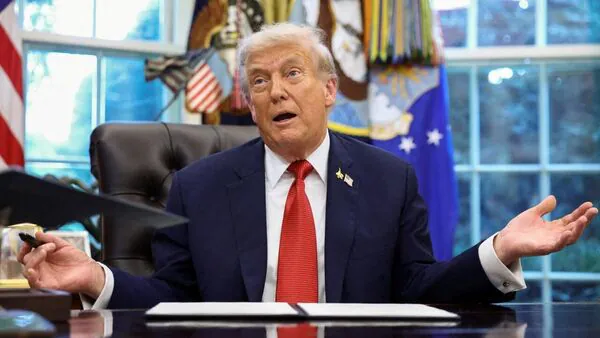
“This made the power more clear, not less,” Trump said following the decision, indicating his administration will pivot rather than retreat.
Awkward Optics at the State of the Union
The ruling also creates political tension ahead of Trump’s upcoming address to Congress. Traditionally, Supreme Court justices attend the speech. After sharp criticism from Trump following the decision, the atmosphere could be notably strained — particularly for Chief Justice Roberts.
Key Takeaways
- The Supreme Court blocked Trump’s emergency tariffs in a 6–3 ruling.
- The Court said Congress did not clearly grant the president sweeping tariff authority.
- Refund battles over $134 billion are likely.
- The decision could reshape trade policy and impact midterm politics.
- Trump may pursue alternative tariff tools requiring congressional support.
Final Thoughts : This ruling is more than a trade dispute — it’s a defining moment in the ongoing struggle over presidential power. The Supreme Court reaffirmed that even in matters of economic emergency, executive authority has limits.
While Trump still has legal pathways available, this decision sends a powerful message: major economic policy shifts require clear congressional approval.


FAQs
#SupremeCourt #TrumpTariffs #Carrerbook #Anslation #SCOTUSRuling #TradePolicy #USPolitics #BreakingNews #EconomicImpact